
50 Best Shopify Stores for Business Inspiration (2026)
Summary
- Strong brand identity and user-friendly website design are key factors distinguishing e-commerce brands.
- Successful Shopify brands focus on addressing niche market needs, telling unique brand stories, and spreading humanitarian/sustainable values.
- Innovative product strategies, from recycling waste to preserving cultural heritage, help brands create their own unique ấn tượng.
- Optimizing the online shopping experience with fast page loading speeds, simple checkout processes, and useful content is crucial.
- Transparency in origin, production processes, and social responsibility is increasingly valued by customers.
- Leverage high-quality images and authentic reviews to build trust and drive sales.
What makes an e-commerce brand stand out?
Every day, millions of independent businesses worldwide leverage Shopify to connect and sell globally. If you're on a journey to build your own business, the stories from the brands below will be a great source of inspiration. They are transforming waste into fashionable fibers, preserving traditional agricultural products, creating trending beauty products, or pioneering the elimination of single-use plastics.
Let's analyze these excellent case studies to uncover their secrets to success: from product positioning, website design philosophy, to strategies for finding and exploiting market gaps.
Core elements of an excellent Shopify website
The essence of every sustainably growing business lies in a strong brand identity. Successful Shopify stores maintain a consistent and recognizable presence — not just on their website but across all social media channels and e-commerce platforms.
In addition, store design philosophy plays a decisive role. A standard e-commerce website must make the customer's shopping journey as easy as possible. Using a theme that is both functionally optimized and distinctively branded will help customers browse products and make purchases in just a few clicks.
The online shopping experience directly determines your conversion rate. To maximize sales, equip your store with user-centric features: blazing-fast page load speeds, a streamlined checkout process, and a system of useful content (including detailed product descriptions).
Group 1: Featured Fashion & Apparel stores
The leading fashion brands on Shopify share a commonality: a deep understanding of their target audience to deliver products and experiences that meet expectations. From premium denim to vintage-style dresses, these stores possess an acutely sharp aesthetic.
Notable examples:
- Hiut Denim Co.: Reviving a traditional craft with the philosophy of "making the best jeans, not the most." Minimalist website, focusing on quality and meticulousness.
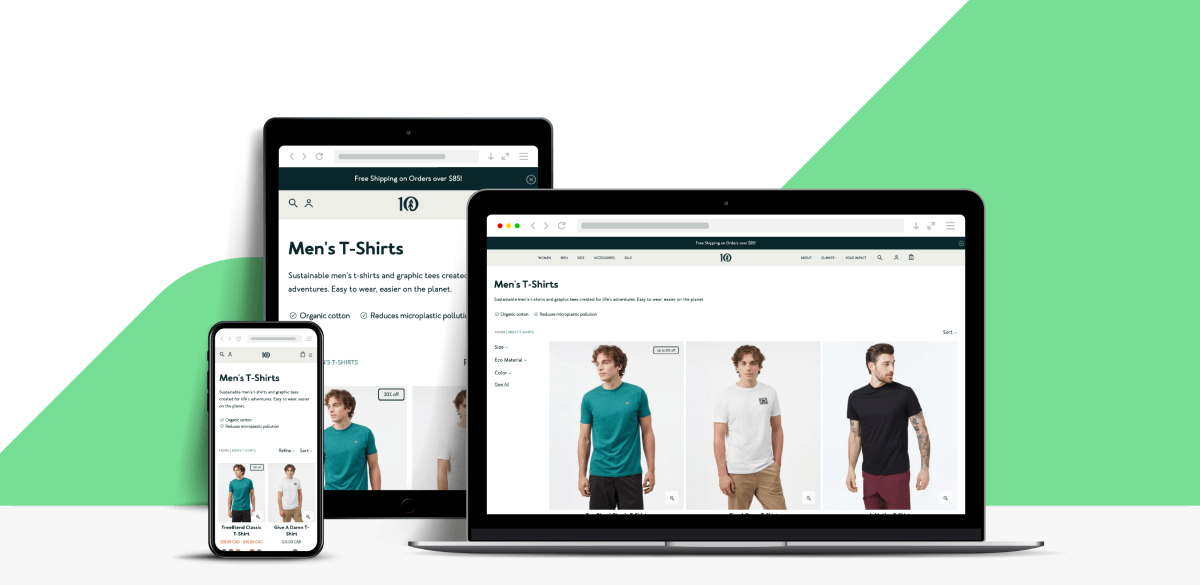
- Tentree: With each product, Tentree plants 10 trees, aiming for 1 billion trees by 2030, demonstrating a strong commitment to the environment.
- Maguire Shoes: Building an independent brand through direct relationships with manufacturing workshops and a website with exclusive designs reflecting customer lifestyles.
- The Outrage: Born from a viral t-shirt, specializing in apparel with social impact messages, updating the homepage according to current events.
- Adored Vintage: Operating a vintage clothing business with a romantic website interface, donating a portion of revenue to education and supporting women entrepreneurs.
- Goodfair: A "mystery combo" used clothing model to save costs and challenge "fast fashion."
- Kirrin Finch: Gender-neutral fashion, prioritizing eco-friendly fabrics and ethical production processes.
- Rothy's: Famous for transforming recycled materials into stylish shoes and accessories using 3D knitting technology, aiming for zero-waste.
- Beefcake Swimwear: Sustainable swimwear, 1920s style, transparently disclosing production costs to build trust.
- Suta: Creating livelihoods for disadvantaged weavers, combining traditional handcrafted materials with modern designs.
Group 2: Art & Home Decor stores
The strength of successful art and decor stores on Shopify is their excellent visual consistency across all customer touchpoints. Their websites are always filled with artistic illustrations and sharp, in-depth product photography.
Notable examples:
- Uppercase magazine: High-quality print magazine, expanding its product ecosystem via Shopify with related publications.
- Artisaire: A typical example of maximizing focus on a niche market: wax seal art, with meticulous detail and handwritten thank-you notes.
- Terre Bleu: From a lavender farm, selling beauty and food products extracted from pure lavender.
- Silk and Willow: Offering sustainable wedding decorations, focusing on naturally dyed fabrics and delicate handcrafted products.
- GOODEE: Connecting and distributing products from independent artisans, prioritizing fair trade and telling the story of each craftsman.
Group 3: Electronics & Tech Gadget stores
The secret to success in this industry group is describing product features and benefits in an extremely visual and easy-to-understand way, closely integrated with customer education.
Notable examples:
- Bruvi: Offers at-home capsule coffee machines with a commitment to minimizing environmental impact, promoting sustainable sourcing.
- Pela: Specializes in biodegradable phone cases, reducing emissions and water in production, with a smart filter on the website.
- Cowboy: Sells smart electric bikes, leveraging high-quality videos to showcase technology and allow test rides.
Group 4: Subscription-based stores
The subscription model helps businesses ensure steady recurring revenue by allowing customers to subscribe to essential products on a monthly/quarterly cycle.
Notable examples:
- Cocolab: Regular oral care product box, making oral hygiene enjoyable with innovative designs and flavors.
- Loot Crate: "A regular gift box for gamers and bookworms," designed around hot pop culture themes.
- Pot Gang: Provides seeds, soil, pots, and instructions for those who want to grow their own clean vegetables at home, breaking down the workload.
Group 5: Jewelry & Accessories stores
Visuals (including studio product shots and real-life lifestyle images) combined with authentic reviews from previous customers are the trust leverage that helps these stores explode in sales.
Notable examples:
- United By Blue: With every product sold, commits to removing 1 pound of trash from the ocean, saying no to plastic packaging.
- Manitobah Mukluks: Honors and preserves the traditional shoemaking art of indigenous Canadians, with profits returned to the community.
- Allbirds: An iconic Shopify store, shoes prioritizing comfort and sustainability from natural wool, eucalyptus fiber.
- Camille Brinch: Personalized jewelry, website creates an intimate feel with lifestyle images and videos showcasing the crafting process.
- Velasca: Direct-to-consumer (D2C) model, eliminating intermediaries to offer reasonably priced handcrafted Italian leather shoes.
- Troubadour Goods: Started from personal needs, succeeded through word-of-mouth marketing and hiring a versatile team.
Group 6: Food & Beverage stores
Online food businesses require an extremely rigorous inventory management process and strict preservation systems. Below are brands that have found the formula for success:
Notable examples:
- BLK & Bold: Coffee and tea brand linked to social responsibility, donating 5% of profits to youth support programs.
- Fly by Jing: Redefining Chinese cuisine, products famously launched from a Kickstarter campaign, collaborating with major players through a bold brand-building mindset.
- Verve Coffee Roasters: Evolved from a small coffee shop into a multi-channel business, implementing the Farmlevel Initiative to preserve coffee varieties and pay fair prices.
- Taza Chocolate: Stone-ground chocolate retaining a grainy texture, working directly with farms and publicly disclosing transparent financial reports.
- Wil Yeung (Yeung Man Cooking): Monetized from a Content Creator, selling digital products (courses) and physical goods.
- Flourist: Showcasing grains, beans, and flours as exquisitely as a flower shop, committed to 100% transparent sourcing and honoring farmers.
Group 7: Health & Beauty stores
In the cosmetics and personal care industry — where misinformation can easily proliferate, successful Shopify stores always prioritize ingredient transparency and prominently display reviews from real users.
Notable examples:
- The Honey Pot: Natural feminine care product line, researched from personal experience, intelligent product categorization.
- Package Free: Mission to reduce waste by selling package-free products, famous for its zero-waste philosophy.
- Beauty Bakerie: Creative packaging designed like sweets, inspiring story from the founder, sponsoring orphanages.
- Cheekbone Beauty: Vegan, cruelty-free cosmetics, aiming for zero waste with compostable paper packaging.
- Meow Meow Tweet: Effective vegan skincare products, whimsical animal illustrations on packaging, implementing a "refill" program.
- Beneath Your Mask: Researched natural, non-toxic products after illness, website conveys a premium, healing feel.
- Fresh Heritage: Solutions for a neglected niche market, specialized beard and hair care products for men of color.
- Then I Met You: The art of brand storytelling about the concept of "Jeong," products researched for a decade.
- Range Beauty: Plant-based makeup for sensitive skin, using diverse skin tone models in imagery.
- LastObject: Focuses on designing reusable products to replace single-use items, significantly reducing environmental impact.
- Tofino Soap Company: Small-batch production, artisanal scented candles, soaps, 100% natural ingredients, 80% compostable packaging.
- Satya: Unscented, non-toxic balm with 5 organic ingredients, Indigenous women-owned business, committed to carbon neutrality.
Group 8: Other inspiring stores (Toys, Pets, Kitchenware)
These brands often find market gaps and build business models with strong social impact.
Notable examples:
- Healthy Roots Dolls: Addresses the market shortage of dolls with diverse skin tones and natural hairstyles for girls of color.
- GiveMeTap: A humanitarian model, each water bottle sold helps provide clean water to people in Ghana for 5 years.
- Lunchskins: Offers reusable lunch bags and biodegradable paper bags to eliminate reliance on plastic wrap, contributing funds to ocean conservation.
- Bebemoss: Sustainable crocheted toy brand, creating jobs and fair wages for refugee mothers from Syria.
- Made In: D2C model in the home goods industry, partnering with renowned chefs to distribute high-quality kitchen tools at affordable prices.
Conclusion
From first-time entrepreneurs to global retail corporations, Shopify provides flexible and optimized solutions suitable for every scale. We hope these 50 success stories have helped you gain a clearer vision of product ideas, website design styles, and how to build a deep-rooted brand to confidently enter the e-commerce market!
Next step
Need a high-converting, fast Shopify theme? VertexTrue can help.
Explore Custom Theme Shopify service →